
Imagine you have just finished a presentation, sent a newsletter, shared a blog post, or recommended a film to a friend. You want to know whether the other person found it useful or enjoyable, but you do not want your follow-up message to sound stiff or repetitive. A simple “Hope you enjoyed it” may work perfectly—but depending on the situation, another expression may sound warmer, more professional, or more natural.
The phrase “Hope you enjoyed” is common because it is short, friendly, and easy to understand. However, English speakers use several alternatives depending on what they want to communicate: enjoyment, satisfaction, appreciation, usefulness, or positive feedback.
This guide explains what “Hope You Enjoyed” means, where it comes from, how its tone works, when to use it, and which alternatives are best for professional emails, conversations, presentations, social media, and everyday English.
What Does “Hope You Enjoyed” Mean?
“Hope you enjoyed” expresses the speaker’s expectation or wish that someone had a positive experience with something they watched, read, attended, received, or experienced. It commonly appears after an event, presentation, meal, trip, activity, article, video, or other shared experience. The phrase is usually friendly and polite, although its exact tone depends on the context and what follows it.
In everyday English, “Hope you enjoyed” is often a shortened version of “I hope you enjoyed it” or “I hope you enjoyed the event.” The missing subject “I” is understood from context, particularly in informal messages, emails, captions, and spoken conversation.
For example:
- “Hope you enjoyed the workshop.”
- “Hope you enjoyed the presentation.”
- “Hope you enjoyed your weekend.”
- “Hope you enjoyed the movie.”
- “Hope you enjoyed reading the article.”
The phrase does not necessarily ask for detailed feedback. It simply communicates a positive wish about the other person’s experience.
Origin & History of “Hope You Enjoyed”
The exact expression “hope you enjoyed” does not have a single documented inventor or a specific historical event associated with it. It is a natural combination of two long-established English words: hope and enjoy.
The word hope comes from Old English hopian, meaning to expect or look forward to something with a degree of confidence. The word has remained remarkably stable in English and continues to express a positive expectation.
Enjoy entered English through Anglo-French and Old French forms related to enjoier, carrying meanings connected with taking pleasure in or benefiting from something. Over time, its use broadened into the modern sense of experiencing pleasure or satisfaction.
The modern construction “I hope you enjoyed…” follows a familiar English pattern:
hope + subject + past-tense verb
The past tense matters. “I hope you enjoyed the presentation” normally refers to something that has already happened, while “I hope you enjoy the presentation” usually refers to something currently happening or about to happen.
In contemporary communication, dropping “I” produces the concise form “Hope you enjoyed…”. This omission is especially common in informal writing and digital communication, where short, conversational sentences are preferred.
Synonyms & Alternatives by Tone
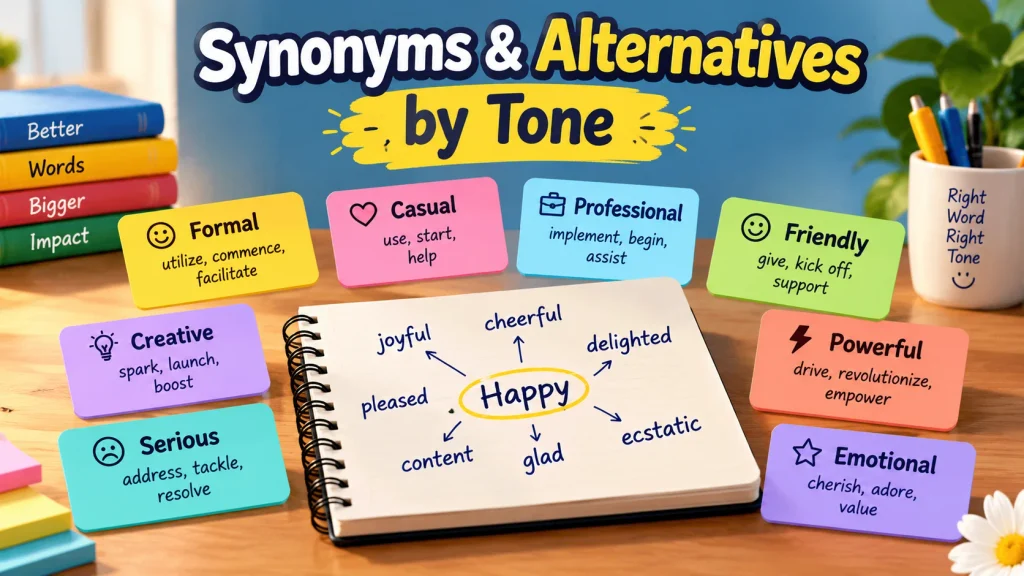
There is no single perfect replacement for “Hope you enjoyed.” The best choice depends on whether you want to sound professional, supportive, enthusiastic, casual, or appreciative.
Professional & Neutral Alternatives
- I hope you found it useful.
- I hope you found the session helpful.
- I hope you had a positive experience.
- I hope the presentation was helpful.
- I hope you found the information valuable.
Polite & Supportive Alternatives
- I hope you found this helpful.
- I hope this was useful to you.
- I hope you got something out of it.
- I hope the session met your expectations.
- I hope you had a good experience.
Encouraging & Reassuring Alternatives
- I hope you found it worthwhile.
- I hope it was helpful.
- I hope you found it valuable.
- I hope you came away with something useful.
- I hope you found what you were looking for.
Casual, Playful & Idiomatic Alternatives
- Hope you had a good time.
- Hope you liked it.
- Hope you had fun.
- Glad you enjoyed it.
- Hope you had a great time.
When Should You Use “Hope You Enjoyed”?
“Hope you enjoyed” works best when the experience has already happened, and you want to express a friendly positive wish without demanding detailed feedback.
Professional settings
It can work well after:
- a workshop
- a team event
- a company presentation
- a webinar
- a training session
- a conference
- a customer experience
For example:
“Thanks for joining today’s webinar. Hope you enjoyed the session.”
For a more formal client relationship, however, “I hope you found the session useful” may communicate more professional value.
Casual conversations
The phrase is completely natural among friends, classmates, colleagues, and acquaintances:
“Hope you enjoyed the concert!”
“Hope you enjoyed your trip.”
Writing, presentations, and digital communication
It is particularly effective in:
- follow-up emails
- newsletters
- blog posts
- social media captions
- event messages
- video descriptions
- messaging apps
When it is especially effective
Use it when:
- The experience is clearly understood from context.
- You want to sound friendly without being overly enthusiastic.
- You are not asking for detailed criticism.
- The relationship is reasonably informal or conversational.
When Should You Avoid “Hope You Enjoyed”?
The phrase is not wrong in formal communication, but there are situations where a more precise expression is stronger.
Overly formal situations
In a highly formal letter, official announcement, or executive communication, “I hope you enjoyed it” can sound slightly conversational.
Consider:
“We hope you found the session informative and valuable.”
Legal, academic, or sensitive contexts
Avoid using enjoyment as the main focus when the subject is serious.
For example, after discussing a difficult workplace issue, saying:
“Hope you enjoyed the meeting.”
could sound inappropriate or insensitive.
Situations where nuance may be lost
“Enjoyed” is about a positive experience, but it does not necessarily communicate usefulness, satisfaction, understanding, or achievement.
If your actual goal is to ask whether someone learned something, say:
“I hope you found the workshop useful.”
If your goal is to assess satisfaction:
“I hope the experience met your expectations.”
If you want feedback:
“I’d be interested to hear what you thought.”
Is “Hope You Enjoyed” Professional, Polite, or Casual?
“Hope you enjoyed” is best described as polite and conversational, with a neutral-to-friendly level of formality.
It is not slang, and it is not unprofessional. However, it is generally less formal than expressions such as “I hope you found the session informative.”
Tone analysis
The phrase usually communicates:
- friendliness
- goodwill
- positive expectation
- mild warmth
- conversational ease
Formality level
A useful scale is:
Formal:
“We hope you found the conference informative.”
Professional-neutral:
“I hope you found the session useful.”
Conversational:
“Hope you enjoyed the session.”
Very casual:
“Hope you had a great time!”
Emotional subtext
The speaker is normally signaling:
“I care about how the experience was for you.”
That does not mean the speaker is necessarily asking for criticism. It is primarily a courteous positive statement.
Pros and Cons of Using “Hope You Enjoyed”
Advantages
- Clarity: Most English speakers understand it immediately.
- Efficiency: It communicates goodwill in only a few words.
- Accessibility: It is easy for ESL learners and international audiences to understand.
- Flexibility: It works in conversation, email, messaging, and social media.
- Friendly tone: It can make a follow-up feel less mechanical.
Potential Drawbacks
- Oversimplification: “Enjoyed” may not accurately describe a serious, educational, or professional experience.
- Tone mismatch: It can sound too casual in highly formal situations.
- Repetition: Frequent use in newsletters or customer messages can make writing feel formulaic.
- Weak feedback signal: It does not directly invite useful comments or evaluation.
Real-Life Examples of “Hope You Enjoyed” by Context
Hi Maya,
Thanks for joining our product demonstration yesterday. Hope you enjoyed the session and found the new reporting features useful.
Best,
Daniel
Meeting
“Thanks, everyone. Hope you enjoyed the discussion. I’ll send the action points this afternoon.”
Presentation
“Thanks for listening, everyone. Hope you enjoyed the presentation, and I hope the examples gave you a few ideas to take back to your teams.”
Conversation
“You finally watched the new season? Hope you enjoyed it.”
Social media
“That’s a wrap on our summer workshop! Hope you enjoyed the photos and behind-the-scenes clips.”
“Hope You Enjoyed” vs Similar Expressions (Key Differences)
These phrases overlap, but they do not communicate the same thing.
| Phrase | Meaning Difference | Tone Difference | Best Use Scenario |
| Hope You Enjoyed | Wishes that someone had a positive or pleasurable experience. | Friendly, conversational | Events, entertainment, trips, shared experiences |
| Hope You Liked It | Focuses more directly on approval or personal preference. | Casual and direct | Friends, recommendations, creative work |
| Hope You Found It Helpful | Focuses on usefulness rather than enjoyment. | Professional and supportive | Advice, training, guides, meetings |
| Hope You Had a Good Time | Emphasizes enjoyment during an event or activity. | Warm and casual | Parties, trips, outings, celebrations |
| Glad You Enjoyed It | States satisfaction that the person enjoyed something rather than expressing a hope. | Warm and confident | After receiving positive feedback |
| Hope It Was Useful | Centers on practical value. | Neutral and professional | Documents, presentations, resources |
| Hope You Found It Valuable | Suggests meaningful benefit or value. | More polished and business-oriented | Consulting, business content, professional events |
The key distinction is simple: “enjoyed” focuses on the experience, “helpful” focuses on usefulness, “valuable” focuses on benefit, and “liked” focuses on personal approval.
Common Mistakes & Misuse of “Hope You Enjoyed”
Overuse
Using the same phrase after every article, presentation, event, or message can make communication sound automated.
Instead of:
“Hope you enjoyed the webinar.”
Every time, vary the language:
“I hope you found today’s session useful.”
or:
“Thanks for attending. I’d love to hear what you thought.”
Incorrect context
“Enjoy” is not suitable for every experience.
A serious training session may be useful, informative, or productive rather than enjoyable.
Contradictory usage
Avoid pairing “hope you enjoyed” with an obviously negative experience unless the wording is intentional.
For example:
“Hope you enjoyed dealing with the delayed flight.”
may sound sarcastic.
Cultural misunderstandings
English speakers often use “enjoy” broadly, but learners may interpret it only as strong pleasure or entertainment.
In professional English, “enjoy” can simply mean having a positive experience.
Psychological Reason People Prefer “Hope You Enjoyed”
People often choose short expressions such as “Hope you enjoyed” because they require little mental effort from either speaker or reader.
Cognitive load reduction
A short phrase is easy to process. The listener does not have to interpret a complicated request or formal statement.
Trust and authority signals
Appropriate simplicity can make communication feel more human. A concise message can signal confidence rather than excessive formality.
Attention economy
Modern readers frequently scan emails, notifications, posts, and messages rather than reading every word. Short expressions communicate goodwill quickly.
Modern communication habits
Digital communication has encouraged conversational structures such as:
- “Hope you’re doing well.”
- “Hope you had a great weekend.”
- “Hope you enjoyed the event.”
- “Thanks for joining.”
These constructions resemble spoken English and can make written communication feel less rigid.
US vs UK Usage of “Hope You Enjoyed”
There is no major difference in grammatical meaning between American and British English. The phrase is understood naturally in both varieties.
Popularity
“Hope you enjoyed…” is common in both the US and UK, particularly in informal and professional-conversational communication.
Tone perception
In both varieties, it tends to sound friendly rather than highly formal.
Regional preferences
Differences are more likely to arise from the surrounding context than from geography. A British professional may prefer:
“I hope you found the session useful.”
An American professional may say:
“Hope you found the session helpful.”
Both are natural, and neither represents a strict US-versus-UK rule.
“Hope You Enjoyed” in Digital & Modern Communication
Emails
Email makes the phrase useful as a warm closing sentence:
“Thanks again for attending. Hope you enjoyed the workshop.”
For customer-facing communication, a more specific version often sounds stronger:
“I hope you found the workshop useful.”
Slack / WhatsApp
The shortened form is particularly natural:
“Hope you enjoyed the team dinner!”
“Hope you enjoyed the video!”
Social media
Creators often use it after sharing content:
“Hope you enjoyed this week’s behind-the-scenes look.”
It works, but repeating the same phrase in every post can make captions predictable.
AI-generated summaries
AI-generated communication frequently favors phrases such as “I hope you enjoyed” because they are grammatically safe, positive, and broadly applicable. Human writers can make the message more natural by connecting it to the specific experience.
Instead of:
“I hope you enjoyed this article.”
try:
“I hope the examples above helped you choose the right phrase for your email.”
The second version is more specific and gives the reader a clearer reason for the message.
Linguistic & Communication Insight
Emotional weight & subtext
The literal meaning of “hope you enjoyed” is straightforward, but native speakers also hear a small social signal: the speaker is showing consideration for the other person’s experience.
The phrase is generally positive without being emotionally intense. It does not say, “I know you loved it.” Instead, it leaves room for the other person to have had a merely satisfactory experience.
Direct vs indirect phrasing
“Hope you enjoyed” is relatively indirect because it expresses a hope rather than asking:
“Did you enjoy it?”
That distinction matters.
“Did you enjoy it?” directly requests an answer.
“Hope you enjoyed it.” expresses goodwill without necessarily requiring a response.
If feedback is important, a more direct sentence is better:
“I’d love to hear what you thought.”
Professional communication perspective
In a workplace, the phrase can soften a closing and make a message feel personable. However, it can become less effective when the actual goal is to communicate measurable value.
For example:
“Hope you enjoyed the training.”
is friendly.
“I hope you found the training useful for your upcoming projects.”
is more purposeful.
Pragmatic reasons for alternatives
Experienced communicators often replace “enjoyed” because the word can be too broad.
They may choose “helpful” to emphasize practical benefit, “valuable” to emphasize impact, or “informative” to emphasize learning.
This can reduce ambiguity while preserving a positive tone.
Social signaling
Word choice affects how a message is perceived.
Compare:
“Hope you liked it.”
with:
“I hope you found it useful.”
The first sounds personal and casual. The second sounds more professional and purpose-driven.
Neither is inherently better. The relationship, audience, and purpose determine the better choice.
Tone & context guidance
That small distinction can make business writing feel much more intentional.
Meaning, Usage & Examples for Each Alternative
I Hope You Found It Helpful
Meaning: This phrase expresses a positive wish that the reader or listener gained practical assistance from something. Why This Phrase Works: It shifts attention from entertainment to usefulness, making it particularly suitable for professional communication. Real-World Usage Insight: It is common after advice, training, guides, presentations, and support conversations. Best Use: Emails, tutorials, customer support, educational material, and workplace follow-ups. Avoid When: The experience was primarily social or entertaining, and usefulness is not the point. Tone: Professional, supportive, and warm. US vs UK Usage: Natural in both US and UK English, with no meaningful difference in usage. Example (Email / Message / Meeting): “Thanks for taking the time to review the draft. I hope you found the notes helpful.”
I Hope You Enjoyed It
Meaning: This means the speaker wishes that someone had a pleasant or satisfying experience. Why This Phrase Works: It is direct, familiar, and broadly understandable. Real-World Usage Insight: Adding “it” makes the sentence grammatically complete when the subject is already known from context. Best Use: Events, entertainment, trips, meals, presentations, and shared experiences. Avoid When: The subject is sensitive or highly formal. Tone: Friendly and conversational. US vs UK Usage: Common and natural in both varieties of English. Example (Email / Message / Meeting): “Thanks for coming to the launch yesterday. I hope you enjoyed it.”
I Hope You Liked It
Meaning: This asks indirectly whether someone approved of or personally enjoyed something. Why This Phrase Works: “Liked” sounds personal and natural when discussing creative work, recommendations, gifts, or entertainment. Real-World Usage Insight: It is more focused on personal preference than “helpful” or “valuable.” Best Use: Friends, creative projects, films, books, designs, gifts, and informal feedback. Avoid When: Writing to a formal client about a business outcome. Tone: Casual, friendly, and personal. US vs UK Usage: Widely understood and used in both US and UK English. Example (Email / Message / Meeting): “I attached the first design concept. Hope you liked it.”
I Hope You Had a Good Time
Meaning: This expresses a wish that someone enjoyed an event, activity, trip, or social occasion. Why This Phrase Works: It sounds natural when the experience involved spending time somewhere or with other people. Real-World Usage Insight: It emphasizes the person’s overall experience rather than a particular piece of content. Best Use: Parties, conferences, trips, dinners, weddings, and outings. Avoid When: Referring to a technical document or formal report. Tone: Warm, casual, and personable. US vs UK Usage: Natural in both US and UK English. Example (Email / Message / Meeting): “Thanks for joining us for dinner last night. I hope you had a good time.”
I Hope You Found It Useful
Meaning: This expresses the expectation that something provided practical value. Why This Phrase Works: It is concise while clearly communicating a professional purpose. Real-World Usage Insight: It is especially effective when sharing resources, instructions, research, or advice. Best Use: Workplace emails, academic resources, reports, guides, and consultations. Avoid When: The experience was purely recreational. Tone: Neutral, professional, and considerate. US vs UK Usage: Common in both varieties. Example (Email / Message / Meeting): “I’ve attached the checklist we discussed. I hope you found it useful.”
I Hope It Was Helpful
Meaning: This means the speaker hopes that something provided assistance or solved a problem. Why This Phrase Works: It is short and focused on the recipient’s needs. Real-World Usage Insight: It sounds especially natural after giving an explanation or answering a question. Best Use: Customer service, tutoring, workplace assistance, and online communication. Avoid When: You need to communicate enjoyment rather than assistance. Tone: Supportive, professional, and approachable. US vs UK Usage: Equally natural in US and UK English. Example (Email / Message / Meeting): “I’ve included the steps below. I hope it was helpful.”
I Hope You Found It Valuable
Meaning: This expresses a wish that someone gained meaningful benefit from an experience or resource. Why This Phrase Works: It connects the experience to value rather than simple enjoyment. Real-World Usage Insight: It is common in business, consulting, training, and professional events. Best Use: Workshops, conferences, consulting sessions, and executive communications. Avoid When: Writing a very casual message to a close friend. Tone: Polished, professional, and positive. US vs UK Usage: Used naturally in both regions. Example (Email / Message / Meeting): “Thank you for attending the strategy session. I hope you found the discussion valuable.”
I Hope You Enjoyed the Experience
Meaning: This refers to the overall quality of someone’s interaction with a service, event, activity, or place. Why This Phrase Works: It is more specific than simply saying “enjoyed it.” Real-World Usage Insight: It is frequently useful in hospitality, events, travel, and customer communication. Best Use: Hotels, restaurants, events, travel, and service follow-ups. Avoid When: The subject is a small document or short message. Tone: Warm and customer-focused. US vs UK Usage: Natural in both varieties. Example (Email / Message / Meeting): “Thank you for attending our open house. We hope you enjoyed the experience.”
Conclusion
“Hope You Enjoyed” is a simple, natural phrase that expresses goodwill after someone has experienced something such as an event, presentation, meal, trip, article, video, or activity. Its friendly and accessible tone makes it suitable for everyday conversations, emails, social media, and many professional situations. However, the best wording depends on what you actually want to communicate.
If you mean enjoyment, “Hope You Enjoyed It” is a natural choice. If you want to emphasize practical benefit, “I Hope You Found It Helpful” or “I Hope You Found It Useful” may be more precise. For professional value, “I Hope You Found It Valuable” can work better, while “I’d Love to Hear What You Thought” is stronger when you genuinely want feedback.
Ultimately, effective communication is about matching your words to the audience, context, and purpose. Understanding these subtle differences helps professionals, students, ESL learners, and content writers sound more natural, clear, and confident in English.
FAQs
Is “Hope You Enjoyed” grammatically correct?
Yes, “Hope You Enjoyed” is grammatically acceptable as a shortened conversational form of “I hope you enjoyed it” or “I hope you enjoyed the event.” The subject “I” is understood from context. It is especially common in emails, messages, captions, and casual professional communication.
What does “Hope You Enjoyed” mean?
“Hope You Enjoyed” means that the speaker wishes the other person had a pleasant or positive experience. It is normally used after something has happened, such as a presentation, event, trip, meal, movie, or activity. The phrase communicates goodwill but does not necessarily ask for detailed feedback.
Is “Hope You Enjoyed” professional?
Yes, but it is professional-conversational rather than highly formal. It works well in friendly workplace emails, webinars, workshops, presentations, and customer communication. In formal business writing, “I hope you found the session useful” or “I hope you found the information valuable” may sound more precise and polished.
What is a professional alternative to “Hope You Enjoyed”?
A strong professional alternative is “I hope you found it helpful.” Other options include “I hope you found the session useful,” “I hope you found the information valuable,” and “I hope the session met your expectations.” The best choice depends on whether you want to emphasize assistance, usefulness, value, or satisfaction.
What is a polite way to say “Hope You Enjoyed”?
“I hope you enjoyed it” is already polite and natural. If you want a warmer alternative, you can say “I hope you had a good time.” For professional situations, “I hope you found it helpful” is polite while also focusing on the recipient’s practical benefit.
What can I say instead of “Hope You Enjoyed”?
Useful alternatives include “I hope you liked it,” “I hope you had a good time,” “I hope you found it helpful,” “I hope you found it useful,” “I hope you found it valuable,” and “I’d love to hear what you thought.” Choose according to whether the focus is enjoyment, usefulness, value, or feedback.
Is “Hope You Enjoyed It” better than “Hope You Liked It”?
Neither is universally better. “Hope You Enjoyed It” focuses on the person’s overall experience, while “Hope You Liked It” emphasizes personal approval or preference. “Enjoyed” is often more suitable for events and experiences; “liked” sounds especially natural when discussing films, designs, writing, gifts, or recommendations.
What is the difference between “Hope You Enjoyed” and “Hope You Found It Helpful”?
The main difference is meaning and purpose. “Hope You Enjoyed” focuses on whether someone had a positive experience, while “Hope You Found It Helpful” focuses on whether something provided useful assistance. The first is broader and friendlier; the second is often more appropriate for professional, educational, or support-related communication.
Can I use “Hope You Enjoyed” in an email?
Yes. “Hope You Enjoyed” works naturally in emails when the context is friendly or conversational. For example: “Thanks for joining yesterday’s workshop. Hope you enjoyed the session.” For formal or client-facing communication, consider a more specific version such as “I hope you found the workshop useful.”
What is the difference between “I hope you enjoyed it” and “Glad you enjoyed it”?
“I hope you enjoyed it” expresses a wish without necessarily knowing how the person felt. “Glad you enjoyed it” responds to information that the person actually enjoyed it. Therefore, use “hope” before you know their reaction and “glad” after they have expressed positive feedback.

