
Imagine you have just finished a difficult week at work. A project has gone wrong, deadlines are piling up, and even a good night’s sleep does not seem to help. A friend sends you a simple message: “This too shall pass.” The words do not solve the problem, but they offer a reminder that the current difficulty may not last forever.
“This too shall pass” means that a difficult, painful, or challenging situation is temporary and will eventually change. People use this expression to offer comfort, encourage patience, and remind themselves or others that circumstances do not remain the same indefinitely.
The phrase is common in everyday conversations, personal messages, motivational writing, workplace discussions, and social media posts. However, its meaning can feel different depending on the situation. It may sound compassionate when someone is struggling, but it can seem dismissive when used to respond to serious grief, financial hardship, or a problem that requires immediate action.
Finding the right alternative helps you communicate the same reassuring idea with greater sensitivity. Whether you are writing a supportive email, comforting a friend, preparing a presentation, or looking for a more professional expression, the best wording depends on your audience and what the other person needs to hear.
This guide explores 20 other terms for “this too shall pass,” their meanings, origins, differences in tone, practical examples, and the situations in which each alternative works best.
What Does “This Too Shall Pass” Mean?

“This too shall pass” is an expression meaning that a current experience, especially a difficult or painful one, is temporary and will eventually change. It is commonly used to offer reassurance during stress, disappointment, grief, uncertainty, or personal setbacks. The phrase encourages patience and perspective without necessarily suggesting that the situation will resolve immediately or without effort.
Origin & History of “This Too Shall Pass”
The expression “this too shall pass” has a long history in storytelling, religious traditions, literature, and popular wisdom. Its exact origin is uncertain, and several historical stories have contributed to its reputation.
The Persian connection
The expression is often associated with Persian wisdom traditions. A frequently repeated story describes a ruler who asks wise advisers to give him a statement that will bring perspective during both happiness and hardship. Their answer is remembered in the familiar idea that everything changes and that neither success nor suffering lasts forever.
Although this story is widely circulated, it should not be treated as a verified historical account of the phrase’s invention. Its precise origins are difficult to establish.
Connections to Jewish and other wisdom traditions
Similar ideas appear in Jewish storytelling, religious reflection, and broader philosophical traditions that explore the temporary nature of human circumstances. The expression is sometimes connected to stories about King Solomon, although versions differ and the historical attribution is uncertain.
The underlying lesson is not limited to one culture: human experiences change, and present circumstances should be understood from a broader perspective.
How the expression became popular
Over time, the saying became familiar in English-language literature, inspirational writing, speeches, and everyday conversation. Its memorable structure makes it easy to repeat, understand, and share.
Today, it frequently appears in:
- Motivational quotes and personal development content.
- Messages of support during difficult periods.
- Social media captions about resilience and recovery.
- Conversations about change, uncertainty, and personal growth.
- Speeches and presentations about overcoming setbacks.
Its modern appeal comes from its simplicity. The phrase expresses a complex idea about change and emotional resilience in just five words.
Importantly, the saying does not guarantee that every problem will resolve in a person’s favor. Its central message is that circumstances can change, even when the future is difficult to predict.
Synonyms & Alternatives by Tone
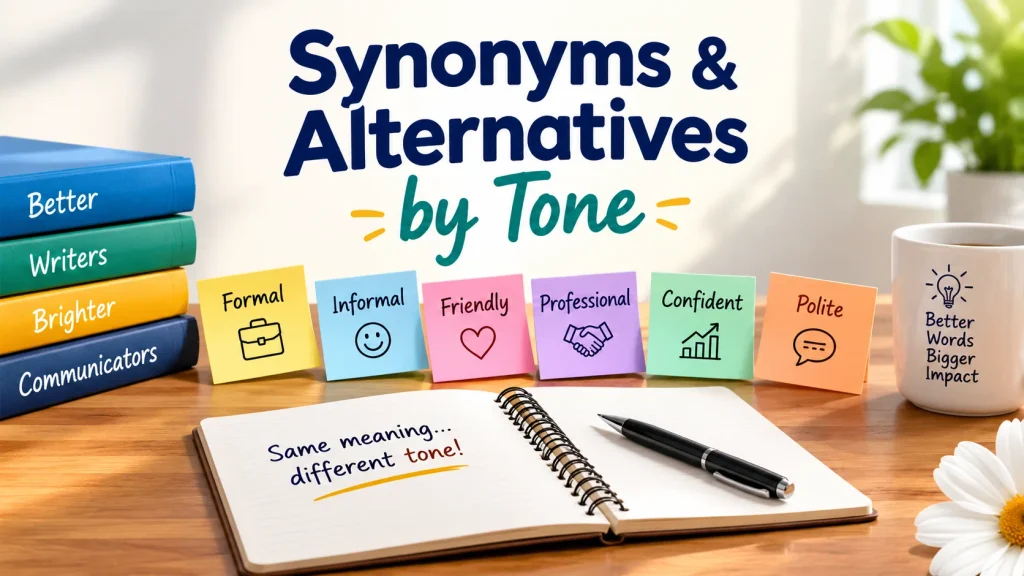
The best alternative to “this too shall pass” depends on whether you want to reassure someone, encourage action, acknowledge uncertainty, or communicate professionally.
Professional & Neutral Alternatives
- Things will change.
- This situation is temporary.
- Circumstances can improve.
- The current challenges will not last forever.
- We will get through this period.
- This is a temporary setback.
- Conditions may improve with time.
- Let’s take this one step at a time.
Polite & Supportive Alternatives
- You’re not going to feel this way forever.
- I’m here for you through this.
- You don’t have to face this alone.
- Take the time you need.
- Things can get better.
- Give yourself some time.
- We’ll work through this together.
- You can take it one day at a time.
Encouraging & Reassuring Alternatives
- Better days are ahead.
- This is only a chapter, not the whole story.
- Keep going; things can change.
- Tough times don’t last forever.
- You’ve made it through hard times before.
- There is light at the end of the tunnel.
- One setback doesn’t define you.
- Every storm eventually passes.
Casual, Playful & Idiomatic Alternatives
- It’s just a rough patch.
- Hang in there.
- This won’t last forever.
- Nothing stays the same forever.
- Ride it out.
- It’ll get easier.
- Keep your chin up.
- Tomorrow is another day.
These alternatives overlap in meaning, but they are not interchangeable in every situation. For example, “I’m here for you through this” emphasizes personal support, while “this is a temporary setback” is more appropriate for a workplace discussion about a project that has encountered problems.
When Should You Use “This Too Shall Pass”?
“This too shall pass” is most useful when someone needs reassurance, perspective, or encouragement during a temporary period of difficulty. It works best when the listener is ready for comfort and when the speaker recognizes the seriousness of the situation.
In professional settings
At work, the phrase can help people maintain perspective during a stressful project, organizational change, difficult quarter, or temporary setback.
For example, a manager might say:
“I know the new system has created extra work for everyone. We’re still adjusting, and this too shall pass as we get more comfortable with the process.”
The expression can create a sense of perspective, but it should not replace practical solutions. Employees experiencing excessive workloads need realistic deadlines and support, not reassurance alone.
Best practice: Pair encouragement with a concrete action, such as reviewing priorities or offering additional resources.
In casual conversations
The phrase fits naturally into conversations with friends, relatives, and colleagues you know well. It can be especially comforting when someone is dealing with disappointment, a difficult week, a breakup, or uncertainty about the future.
For example:
“I know you’re exhausted from everything happening right now. Take a breath. This too shall pass.”
A warm tone and genuine listening make the message more effective.
In writing, presentations, and digital communication
The expression can work in personal emails, reflective essays, motivational presentations, journal entries, and social media posts.
It is particularly suitable when the purpose is to encourage resilience or remind an audience that circumstances change.
In a formal report, however, a more precise sentence may be preferable:
“The current disruption is expected to be temporary, and the team is implementing measures to restore normal operations.”
This version communicates a practical expectation rather than relying on a general saying.
When it is especially effective
Use the phrase when:
- Someone is experiencing a difficult but potentially temporary period.
- You want to offer comfort without pretending to have every answer.
- The listener appreciates reflective or motivational language.
- You want to encourage patience during uncertainty.
- You are discussing personal growth, resilience, or changing circumstances.
The key is to make the reassurance feel earned. Acknowledge the problem before reminding someone that it may not last forever.
When Should You Avoid “This Too Shall Pass”?
Although the phrase is widely understood, some situations call for more specific, careful language.
Overly formal situations
In legal correspondence, official statements, business reports, and formal academic writing, the expression may sound too conversational or imprecise.
Instead of writing:
“This too shall pass, and our department will recover.”
Consider:
“We expect the current operational challenges to ease following the planned changes.”
The second version is more suitable for professional readers because it identifies an expectation without relying on an idiom.
Legal, academic, or sensitive contexts
Avoid using the phrase as a substitute for evidence, professional advice, or a clear explanation of what will happen next.
For example, someone facing a legal dispute needs information about procedures and possible outcomes rather than a general assurance that the problem will eventually pass.
Similarly, someone dealing with bereavement, serious illness, trauma, or financial insecurity may need practical help and emotional acknowledgment.
In these circumstances, a better response might be:
“I know this is incredibly difficult. I’m here to listen, and I’ll help however I can.”
Situations where nuance may be lost
The expression can unintentionally minimize someone’s experience when it is delivered too quickly.
If a colleague says they are overwhelmed by a persistent workload, responding with “This too shall pass” may suggest that they should simply tolerate the situation.
A more useful response would be:
“That sounds like a lot to manage. Let’s look at what we can change to make the workload more manageable.”
When immediate action is necessary
Do not use the phrase to delay action on urgent safety concerns, harassment, discrimination, medical emergencies, financial deadlines, or other problems that require intervention.
Reassurance is most helpful when it accompanies appropriate action, rather than replacing it.
Is “This Too Shall Pass” Professional, Polite, or Casual?
“This too shall pass” is generally polite, reflective, and moderately informal. It is widely understood in English, but its suitability depends on the relationship between the speaker and listener.
| Communication factor | Assessment | Explanation |
| Formality | Moderately informal | It is an established saying, not usually formal business language. |
| Politeness | Usually polite | It is commonly intended to comfort or encourage. |
| Professionalism | Context-dependent | It can fit supportive leadership but may be too vague for formal documents. |
| Emotional tone | Reassuring and reflective | It encourages patience and perspective. |
| Directness | Indirect | It implies that circumstances will change without specifying how or when. |
| Potential risk | Can sound dismissive | It may minimize hardship if the speaker has not acknowledged the problem. |
How different audiences may interpret it
- Friends and family: Usually a warm reminder that a difficult experience is temporary.
- Managers and colleagues: A way to encourage perspective during uncertainty, provided it does not dismiss legitimate concerns.
- Students: A reminder that academic setbacks and stressful periods do not necessarily determine future outcomes.
- Clients and customers: Potentially too vague if they expect a timeline, explanation, or concrete resolution.
- People experiencing grief: Potentially comforting to some, but painful to others if they feel pressured to move on.
The phrase is not inherently unprofessional or insensitive. The important question is whether it acknowledges the listener’s experience and meets their actual communication needs.
Conclusion
“This too shall pass” is a timeless expression that reminds people that difficult experiences, uncertainty, and challenging circumstances are not necessarily permanent. Its simple wording makes it useful in personal conversations, motivational writing, social media, and supportive workplace communication.
However, the best alternative depends on your purpose. “This is a temporary setback” works well in professional settings, while “I’m here for you through this” offers more personal reassurance. Expressions such as “hang in there,” “better days are ahead,” and “let’s take this one step at a time” provide different ways to encourage someone without repeating the same familiar saying.
When choosing among these alternatives, consider the audience, the seriousness of the situation, and whether the person needs reassurance, empathy, or practical help. Avoid promising that everything will improve when the outcome is uncertain.
Ultimately, effective communication is not about finding the most impressive synonym. It is about choosing words that communicate your intentions clearly, respect the other person’s experience, and offer the right kind of support at the right time.
SEO meta description (140–145 characters):
Explore 20 other terms for “This Too Shall Pass,” including meanings, synonyms, examples, and professional alternatives for every situation.
Conclusion
“This too shall pass” is a meaningful expression that reminds us that difficult circumstances, emotional struggles, and unexpected setbacks can change with time. It offers reassurance, encourages patience, and helps people maintain perspective when life feels uncertain. However, choosing the right words depends on the situation, the audience, and the kind of support someone needs.
Alternatives such as “tough times don’t last forever,” “better days are ahead,” and “let’s take this one step at a time” communicate similar ideas with different tones. In professional settings, “this is a temporary setback” may sound more precise, while “I’m here for you through this” can provide a more personal sense of comfort.
When using these expressions, remember that reassurance should not minimize someone’s feelings or replace practical help. Acknowledging a challenge before offering encouragement makes your message more thoughtful and sincere.
Ultimately, the best alternative to “this too shall pass” is one that fits your intention, respects the listener’s experience, and communicates hope without making unrealistic promises. Choosing your words carefully can make everyday conversations more supportive, natural, and effective.
1. What does “this too shall pass” mean?
“This too shall pass” means that a current situation, particularly a difficult or painful one, will eventually change. People commonly use it to offer comfort during stress, disappointment, uncertainty, or personal challenges. The expression encourages patience and perspective without guaranteeing that every problem will resolve exactly as expected.
2. What are the best synonyms for “this too shall pass”?
Popular alternatives include “tough times don’t last forever,” “better days are ahead,” “hang in there,” “things will get better,” and “this is a temporary setback.” Each expression has a slightly different tone. Choose one based on whether you want to offer emotional support, encourage perseverance, or communicate professionally.
3. What is a professional way to say “this too shall pass”?
Professional alternatives include “this is a temporary setback,” “we’ll work through this challenge,” and “conditions are expected to improve.” These expressions are suitable for workplace conversations, team meetings, and business emails. When possible, combine reassurance with specific next steps to make your message more credible and useful.
4. Is “this too shall pass” positive or negative?
The phrase is generally positive because it encourages hope and reminds people that difficult circumstances can change. However, its impact depends on context. It may feel comforting when offered with empathy, but dismissive when someone uses it to minimize another person’s grief, stress, or serious problems.
5. How do you use “this too shall pass” in a sentence?
You can use the expression to reassure someone experiencing a difficult period. For example: “I know you’ve had a challenging month at work, but this too shall pass.” It works best when delivered sincerely and accompanied by acknowledgment of the person’s feelings or an offer of practical support.
6. What is a comforting alternative to “this too shall pass”?
“I’m here for you through this” is a comforting alternative because it emphasizes support rather than predicting the future. Other options include “you don’t have to face this alone” and “take the time you need.” These expressions work particularly well when someone is experiencing sadness, disappointment, or uncertainty.
7. Is “this too shall pass” a cliché?
“This too shall pass” can sound clichéd because it is widely used in inspirational quotes, social media posts, and everyday conversations. However, familiar expressions can still be meaningful when used thoughtfully. Personalizing the message by acknowledging someone’s specific difficulty can make the reassurance feel more genuine and less repetitive.
8. What is the difference between “this too shall pass” and “hang in there”?
“This too shall pass” emphasizes that circumstances will change over time, whereas “hang in there” encourages someone to persevere through difficulty. The first offers perspective; the second focuses on endurance. Use “this too shall pass” for reassurance and “hang in there” for casual encouragement.
9. Can “this too shall pass” be used in a work email?
Yes, “this too shall pass” can appear in a supportive, informal work email, particularly when communicating with familiar colleagues. However, a more precise alternative, such as “this is a temporary setback,” may be better for formal communication. Match your wording to the workplace culture and the seriousness of the issue.
10. Where did the phrase “this too shall pass” originate?
The phrase is often associated with Persian wisdom traditions and stories involving rulers seeking advice about changing circumstances. Similar ideas appear in religious and philosophical traditions. However, its exact origin is uncertain, and popular stories attributing it to particular historical figures should not be treated as definitively verified accounts.
SEO Meta Description
Discover 20 alternatives to “This Too Shall Pass,” with meanings, examples, synonyms, and practical tips for choosing the right expression.
Conclusion
“This too shall pass” is a meaningful expression that reminds us that difficult circumstances, emotional struggles, and unexpected setbacks can change with time. It offers reassurance, encourages patience, and helps people maintain perspective when life feels uncertain. However, choosing the right words depends on the situation, the audience, and the kind of support someone needs.
Alternatives such as “tough times don’t last forever,” “better days are ahead,” and “let’s take this one step at a time” communicate similar ideas with different tones. In professional settings, “this is a temporary setback” may sound more precise, while “I’m here for you through this” can provide a more personal sense of comfort.
When using these expressions, remember that reassurance should not minimize someone’s feelings or replace practical help. Acknowledging a challenge before offering encouragement makes your message more thoughtful and sincere.
Ultimately, the best alternative to “this too shall pass” is one that fits your intention, respects the listener’s experience, and communicates hope without making unrealistic promises. Choosing your words carefully can make everyday conversations more supportive, natural, and effective.
FAQs
1. What does “this too shall pass” mean?
“This too shall pass” means that a current situation, particularly a difficult or painful one, will eventually change. People commonly use it to offer comfort during stress, disappointment, uncertainty, or personal challenges. The expression encourages patience and perspective without guaranteeing that every problem will resolve exactly as expected.
2. What are the best synonyms for “this too shall pass”?
Popular alternatives include “tough times don’t last forever,” “better days are ahead,” “hang in there,” “things will get better,” and “this is a temporary setback.” Each expression has a slightly different tone. Choose one based on whether you want to offer emotional support, encourage perseverance, or communicate professionally.
3. What is a professional way to say “this too shall pass”?
Professional alternatives include “this is a temporary setback,” “we’ll work through this challenge,” and “conditions are expected to improve.” These expressions are suitable for workplace conversations, team meetings, and business emails. When possible, combine reassurance with specific next steps to make your message more credible and useful.
4. Is “this too shall pass” positive or negative?
The phrase is generally positive because it encourages hope and reminds people that difficult circumstances can change. However, its impact depends on context. It may feel comforting when offered with empathy, but dismissive when someone uses it to minimize another person’s grief, stress, or serious problems.
5. How do you use “this too shall pass” in a sentence?
You can use the expression to reassure someone experiencing a difficult period. For example: “I know you’ve had a challenging month at work, but this too shall pass.” It works best when delivered sincerely and accompanied by acknowledgment of the person’s feelings or an offer of practical support.
6. What is a comforting alternative to “this too shall pass”?
“I’m here for you through this” is a comforting alternative because it emphasizes support rather than predicting the future. Other options include “you don’t have to face this alone” and “take the time you need.” These expressions work particularly well when someone is experiencing sadness, disappointment, or uncertainty.
7. Is “this too shall pass” a cliché?
“This too shall pass” can sound clichéd because it is widely used in inspirational quotes, social media posts, and everyday conversations. However, familiar expressions can still be meaningful when used thoughtfully. Personalizing the message by acknowledging someone’s specific difficulty can make the reassurance feel more genuine and less repetitive.
8. What is the difference between “this too shall pass” and “hang in there”?
“This too shall pass” emphasizes that circumstances will change over time, whereas “hang in there” encourages someone to persevere through difficulty. The first offers perspective; the second focuses on endurance. Use “this too shall pass” for reassurance and “hang in there” for casual encouragement.
9. Can “this too shall pass” be used in a work email?
Yes, “this too shall pass” can appear in a supportive, informal work email, particularly when communicating with familiar colleagues. However, a more precise alternative, such as “this is a temporary setback,” may be better for formal communication. Match your wording to the workplace culture and the seriousness of the issue.
10. Where did the phrase “this too shall pass” originate?
The phrase is often associated with Persian wisdom traditions and stories involving rulers seeking advice about changing circumstances. Similar ideas appear in religious and philosophical traditions. However, its exact origin is uncertain, and popular stories attributing it to particular historical figures should not be treated as definitively verified accounts.

