
Imagine a coworker gives you incomplete information, encourages you to make a decision, and then reveals that the situation was designed to make you look responsible for a mistake. You might naturally say, “You set me up.” The phrase is short, direct, and emotionally charged, but its exact meaning depends heavily on context, tone, and what happened beforehand.
In everyday English, “you set me up” can mean that someone deliberately created a situation to deceive, embarrass, trap, or blame you. In other contexts, however, “set someone up” can have neutral or positive meanings, such as arranging an introduction, preparing someone for success, or helping establish a business. Cambridge Dictionary recognizes both the “made to seem guilty” sense and several neutral meanings of set up. (Cambridge Dictionary)
This distinction matters for professionals, students, ESL learners, and content writers because choosing the wrong alternative can make a message sound more aggressive, more formal, or more accusatory than intended. Understanding the alternatives allows you to communicate the same basic idea with greater precision.
What Does “You Set Me Up” Mean?

“You set me up” usually means that you deliberately arranged a situation so that I would be deceived, embarrassed, trapped, blamed, or made to appear responsible for something. The phrase commonly appears when someone believes another person engineered circumstances against them, especially in arguments, workplace conflicts, practical jokes, investigations, or situations involving misleading information. The exact meaning depends on context and tone.
The phrase can also have a different meaning in other contexts. For example, “My friends set me up with someone” means they arranged for me to meet a potential romantic partner, while “My parents set me up in business” can mean they helped me establish a career or business. Cambridge specifically lists meanings involving establishing someone professionally as well as creating the appearance that someone has done something wrong. (Cambridge Dictionary)
When someone says “You set me up” without additional context, however, listeners will often interpret it as an accusation: You deliberately created a situation that caused me trouble.
Origin & History of “You Set Me Up”
The expression comes from the much older English phrasal verb “set up.” The verb set has deep Germanic roots and has long carried ideas such as placing, positioning, establishing, or putting something into a particular condition. Adding “up” created a highly productive English phrasal verb capable of expressing several related actions, including arranging, establishing, preparing, and creating a situation.
The noun “setup” is recorded from the early seventeenth century as a noun form connected with the verb phrase set up. Dictionary.com lists its first recorded use around 1600–1610. One later meaning developed around a prearranged situation designed to fool or trap someone. (Dictionary.com)
The negative meaning fits a broader English pattern in which arranging circumstances can imply deliberately positioning a person for a particular outcome. If that outcome is harmful, deceptive, or unfair, set someone up can mean creating the circumstances in which that person will take the blame or fall into a trap.
Modern English preserves several meanings at once. Someone can set up a meeting, set up a company, set someone up on a date, or set someone up to look guilty. The surrounding words determine which interpretation is intended. (Cambridge Dictionary)
This multiple-meaning structure is particularly important for ESL learners. The literal meanings of set and up do not automatically reveal the idiomatic meaning. The phrase has developed into a flexible phrasal verb whose interpretation depends strongly on context.
Synonyms & Alternatives by Tone
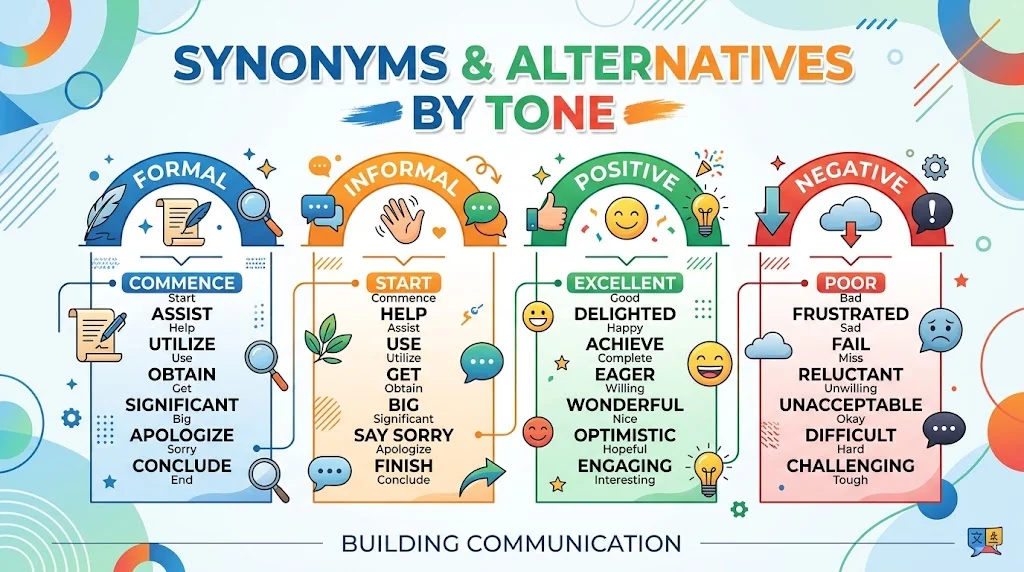
There is no single perfect synonym for “you set me up.” The best replacement depends on whether you mean framed, tricked, trapped, misled, manipulated, or simply placed in a difficult situation.
Professional & Neutral Alternatives
- You put me in a difficult position.
- You placed me in a difficult situation.
- You created a misleading situation.
- You arranged the situation against me.
- You made me appear responsible.
- You put me at a disadvantage.
- You led me into the situation.
- You engineered the situation.
- You created circumstances that worked against me.
Polite & Supportive Alternatives
- I think I was misled.
- I may have been given incomplete information.
- I was placed in a difficult position.
- I didn’t have the full picture.
- I wasn’t aware of what was happening.
- I feel I was put in an unfair situation.
- I think the situation was arranged without my knowledge.
Encouraging & Reassuring Alternatives
- You didn’t give me the information I needed.
- I was put in a difficult spot.
- I wasn’t prepared for what happened.
- I was caught off guard.
- I was given the wrong impression.
- I was led to believe something different.
- The situation wasn’t what I expected.
Casual, Playful & Idiomatic Alternatives
- You tricked me.
- You played me.
- You got me good.
- You walked me right into that.
- You caught me off guard.
- You pulled a fast one on me.
- You threw me under the bus.
- You made me the fall guy.
- You made me the scapegoat.
- You trapped me.
Important distinction: these expressions are not interchangeable in every situation. “You framed me” suggests false blame, while “you tricked me” suggests deception. “You threw me under the bus” usually means someone shifted blame onto you, while “you set me up” can suggest that the harmful situation was deliberately created in advance.
When Should You Use “You Set Me Up”?
Professional Settings
Use “you set me up” carefully at work. It can be appropriate when you are directly addressing a serious concern, particularly when you believe someone intentionally created circumstances that would make you look responsible.
For example:
“I felt like you set me up by asking me to approve the document without mentioning the missing figures.”
However, a more measured professional version might be:
“I feel I was put in a difficult position because I wasn’t given the complete information.”
The second version communicates the problem without immediately assigning malicious intent.
Casual Conversations
The phrase is very natural in informal speech. Friends might say:
“You set me up! You knew I was going to answer that.”
In a playful situation, the phrase may not be a serious accusation at all. Facial expression, laughter, voice, and shared knowledge can turn it into a joke.
Writing, Presentations, and Digital Communication
In writing, context becomes more important because readers cannot hear your tone. “You set me up” can look more confrontational in an email or message than it sounds in a face-to-face conversation.
For professional writing, consider whether “I was put in a difficult position”, “I was given incomplete information,” or “I believe the situation was handled unfairly” communicates your concern more precisely.
When It Is Especially Effective
The phrase works particularly well when:
- Someone deliberately prepared a situation against you.
- You believe you were tricked into taking an action.
- Someone made you appear responsible for something.
- You are speaking informally with someone who understands the context.
- The accusation of deliberate planning is important to your message.
When Should You Avoid “You Set Me Up”?
Avoid the phrase when the evidence does not establish deliberate intent.
If a colleague accidentally gave you outdated information, saying “You set me up” may unfairly suggest that they planned the problem. A neutral statement such as “I think I was working with incomplete information” is more accurate.
You should also be cautious in:
- Legal situations, where precise descriptions of events matter.
- Academic writing, where conversational accusations are usually inappropriate.
- Formal workplace complaints, where specific facts are stronger than emotionally loaded wording.
- Sensitive interpersonal conversations, where blame may immediately make the other person defensive.
- Cross-cultural communication, where an idiom may be interpreted more literally or more seriously than intended.
The central issue is intent. “You set me up” normally carries an implication that the other person deliberately arranged the circumstances.
Is “You Set Me Up” Professional, Polite, or Casual?
“You set me up” is generally casual and direct rather than formally professional. Its level of seriousness depends on context.
The phrase can carry several layers of meaning:
- Directness: High
- Formality: Low to moderate
- Emotional intensity: Moderate to high
- Accusatory potential: High
- Clarity in informal speech: High
- Suitability for formal documents: Limited
In a friendly conversation, it may simply mean, “You tricked me into saying or doing that.”
In a workplace dispute, it may sound like an allegation of deliberate misconduct.
The emotional subtext is often:
“I believe you knew what would happen and deliberately allowed me to walk into the situation.”
That is why experienced communicators often choose a softer alternative when they want cooperation rather than confrontation.
Pros and Cons of Using “You Set Me Up”
Advantages
Clarity: The phrase quickly communicates that the speaker believes the situation was deliberately arranged.
Efficiency: It expresses a complicated accusation in only four words.
Accessibility: It is common conversational English and is easy for most native speakers to understand.
Emotional accuracy: When someone genuinely believes they were deliberately trapped or framed, the phrase can accurately reflect their emotional response.
Potential Drawbacks
Oversimplification: It can reduce a complicated situation to a simple accusation of intentional wrongdoing.
Tone mismatch: A phrase that sounds normal between friends can sound hostile in a formal workplace.
Repetition: Frequent use of the phrase can make a speaker sound accusatory even when situations are merely misunderstandings.
Intent assumption: It often implies deliberate planning. If the evidence only shows that something went wrong, a less accusatory phrase may be more accurate.
Real-Life Examples of “You Set Me Up” by Context
Emails
This is emotionally strong. For a formal complaint, a more factual version would usually be preferable.
Meetings
“Wait, you knew the client was going to ask about the budget? You set me up!”
Here, the phrase can sound humorous or frustrated depending on the speaker’s delivery.
Presentations
“You gave me the old sales figures and then asked me to explain the new results. You set me up.”
The speaker is accusing someone of deliberately putting them in a difficult position.
Conversations
“I knew that question was coming. You set me up.”
This can be playful if a friend intentionally asks a question that leads to an embarrassing confession.
Social Media
“My friends asked me to tell the story, knowing the person involved was sitting right there. You set me up.
The emoji changes the likely interpretation from serious accusation to playful embarrassment.
“You Set Me Up” vs Similar Expressions (Key Differences)
| Phrase | Meaning Difference | Tone Difference | Best Use Scenario |
| You framed me | You deliberately made me appear guilty of something I did not do. | Serious, accusatory | False accusations, wrongdoing, investigations |
| You tricked me | You deceived me or caused me to believe something untrue. | Casual to moderately serious | Everyday deception |
| You trapped me | You created or used circumstances from which I could not easily escape. | Direct, emotional | Arguments, games, difficult situations |
| You manipulated me | You influenced my behavior through deliberate psychological or strategic pressure. | Serious, analytical | Relationships, workplace conflicts |
| You played me | You deceived or used me, often for your own advantage. | Casual, emotional | Dating, friendships, informal conflicts |
| You threw me under the bus | You protected yourself or shifted blame by making me look responsible. | Idiomatic, conversational | Workplace and group situations |
The key difference is that “you set me up” focuses on the arrangement of circumstances. It suggests that someone created a situation in which something happened to you.
“You framed me” is narrower and stronger: it normally concerns making an innocent person appear guilty. Cambridge describes setting someone up in this negative sense as creating the appearance that someone did something wrong. (Cambridge Dictionary)
Common Mistakes & Misuse of “You Set Me Up”
Overuse
Using “you set me up” for every unpleasant outcome weakens its meaning. Someone disagreeing with you, correcting your mistake, or asking a difficult question does not automatically mean they set you up.
Incorrect Context
Do not automatically interpret “set me up” as negative. English speakers also use it positively:
“My friend set me up with someone.”
Here, the meaning is matchmaking rather than deception. The phrase can also mean establishing someone in a career or business. (Cambridge Dictionary)
Contradictory Usage
Be careful with constructions such as:
“You set me up to succeed.”
This is grammatically valid, but it has a positive meaning: you prepared or positioned me for success.
By contrast:
“You set me up.”
usually has a negative interpretation when said during a conflict.
The words surrounding the phrase determine the meaning.
Cultural Misunderstandings
ESL learners may hear “set me up” and assume it means “prepare me.” That interpretation is possible in some contexts, but “You set me up!” during an argument is usually an accusation of deception or deliberate positioning.
The safest approach is to examine the complete sentence and surrounding situation.
Psychological Reasons People Prefer “You Set Me Up”
Cognitive Load Reduction
Short phrases are efficient. Instead of explaining an entire sequence of events, a speaker can say “You set me up” and rely on shared context.
The listener then reconstructs the missing details from the conversation.
Trust and Authority Signals
Direct language can signal confidence. Saying:
“You set me up.”
sounds more certain than:
“I wonder whether the way this situation unfolded may have put me at a disadvantage.”
However, confidence is not the same as accuracy. Strong language can make a claim sound more certain than the available evidence supports.
Attention Economy
Modern communication rewards short, recognizable expressions. Messages on Slack, WhatsApp, social platforms, and text messages often favor compact phrases over lengthy explanations.
Modern Communication Habits
People increasingly communicate in environments where context is shared, and messages are brief. Idiomatic expressions such as “you set me up,” “you played me,” and “you threw me under the bus” allow speakers to communicate emotional meaning quickly.
US vs UK Usage of “You Set Me Up”
The phrase is understood in both American and British English, and the core meanings are broadly shared.
Popularity
There is no major comprehension barrier between US and UK speakers. Both varieties use set up extensively as a phrasal verb for arranging, establishing, preparing, and creating situations.
Tone Perception
The negative expression “you set me up” is generally understood as an accusation in both varieties. However, individual speakers may interpret its seriousness differently depending on context.
Regional Preferences
British and American speakers may choose different surrounding vocabulary, but set up itself is not strongly restricted to one variety.
For ESL learners, the important lesson is that the phrase is broadly international English. What changes most is context and tone, not the basic meaning.
“You Set Me Up” in Digital & Modern Communication
Emails
Email requires more care because there are no vocal cues. A sentence such as:
“You set me up to fail.”
can sound like a formal accusation.
A workplace alternative might be:
“I wasn’t given the information I needed to complete the task successfully.”
Slack / WhatsApp
The phrase is much more natural in instant messaging:
The surrounding conversation, emojis, and relationship help establish whether the statement is serious.
Social Media
Social platforms often use the phrase humorously:
“My friends knew exactly what they were doing. They set me up for that answer.”
Here, it may refer to playful embarrassment rather than serious wrongdoing.
AI-Generated Summaries
AI-generated summaries often replace idiomatic language with more explicit wording. A statement such as “You set me up” may be summarized as:
“The speaker believes the other person deliberately created a situation that caused them to appear responsible.”
This can improve clarity but may remove some emotional force.
For content writers and editors, this distinction matters: semantic accuracy includes emotional meaning, not only dictionary meaning.
Linguistic & Communication Insight
Emotional Weight & Subtext
Native speakers often hear more than the literal words. “You set me up” can imply suspicion, betrayal, frustration, embarrassment, or anger.
The phrase may communicate:
“You knew what was going to happen, and you allowed me to walk into it.”
That subtext is why the expression can feel much stronger than “You gave me the wrong information.”
Direct vs Indirect Phrasing
Compare:
“You set me up.”
with:
“I think I was given incomplete information.”
The first places responsibility directly on the other person. The second focuses on the speaker’s experience and leaves room for the possibility that the problem was accidental.
Neither is inherently better. The correct choice depends on the goal.
If your goal is urgency or confrontation, direct language may be appropriate.
If your goal is problem-solving or collaboration, indirect language may produce a more productive response.
Professional Communication Perspective
At work, experienced communicators often separate observable facts from assumptions about intent.
Instead of:
“You set me up to fail.”
a manager might say:
“I was asked to make the decision before I had access to the final figures.”
The second sentence is easier to verify and less likely to trigger an argument over motives.
Pragmatic Reasons for Alternatives
Professionals may choose alternatives because they want to:
- Reduce defensiveness.
- Preserve a working relationship.
- Avoid claiming intent without evidence.
- Keep communication factual.
- Invite clarification.
- Signal fairness.
- Maintain authority without sounding aggressive.
For example, “I was put in a difficult position” can communicate the same practical problem while allowing the other person to explain what happened.
Social Signaling
Language also tells people how you want the conversation to proceed.
“I think there was a misunderstanding” invites discussion.
The words therefore influence not only meaning but also trust, defensiveness, cooperation, and engagement.
Tone & Context Guidance
Before using “you set me up,” ask:
- Do I believe the other person acted intentionally?
- Do I have evidence for that belief?
- Do I want accountability or cooperation?
- Is the conversation private or public?
- Could a less accusatory phrase communicate the same problem?
- Will the audience understand the idiom?
These questions help match the wording to the situation.
Conclusion
“You set me up” is a common English phrase used when someone believes another person deliberately created a situation that caused them to be deceived, embarrassed, trapped, or blamed. Its meaning can change significantly with context, however, because “set up” also has positive and neutral uses, such as arranging a meeting, introducing two people, or preparing someone for success. Choosing the right alternative therefore depends on your intended meaning, relationship with the listener, and level of formality.
In casual conversations, phrases such as “you tricked me,” “you played me,” or “you trapped me” may sound natural. In professional settings, more measured expressions such as “you put me in a difficult position” or “I was given incomplete information” can communicate the concern without sounding unnecessarily accusatory. Understanding these distinctions helps ESL learners, students, professionals, and writers use “you set me up” accurately while maintaining clarity, appropriate tone, and effective communication.
FAQs
What does “you set me up” mean?
“You set me up” usually means that someone deliberately arranged a situation so you would be deceived, trapped, embarrassed, or blamed. It can also have neutral or positive meanings depending on context, such as arranging a date or preparing someone for success. The surrounding words and situation determine which meaning the listener understands.
Is “you set me up” a negative phrase?
Usually, “you set me up” has a negative meaning when used by itself during a disagreement. It often suggests that someone intentionally created circumstances that caused you trouble. However, “set up” is not always negative. For example, “They set me up for success” is positive, while “She set me up with a friend” can mean arranging a romantic introduction.
Is “you set me up” professional?
“You set me up” is generally conversational rather than formally professional. It can sound accusatory in workplace communication because it may suggest deliberate wrongdoing. In a formal setting, alternatives such as “I was put in a difficult position” or “I was given incomplete information” are usually more diplomatic and precise.
What is another way to say “you set me up”?
Useful alternatives include “you tricked me,” “you framed me,” “you trapped me,” “you deceived me,” “you manipulated me,” and “you put me in a difficult position.” The best alternative depends on the situation. “Framed me” suggests false guilt, while “tricked me” emphasizes deception, and “put me in a difficult position” sounds more professional.
What is the difference between “you set me up” and “you framed me”?
“You framed me” is more specific and serious than “you set me up.” It normally means someone deliberately made you appear guilty of something you did not do. “You set me up” has a broader meaning and can describe being tricked, trapped, embarrassed, or placed in a difficult situation without necessarily involving false evidence.
What is the difference between “you set me up” and “you tricked me”?
“You tricked me” focuses on deception, meaning someone deliberately caused you to believe something false or misleading. “You set me up” often focuses on the arrangement of circumstances that led to the problem. Someone can trick you without creating a broader setup, while a setup usually suggests some deliberate preparation or positioning.
Can “you set me up” be used jokingly?
Yes. Friends and family members often use “you set me up” playfully when someone asks a question designed to produce an embarrassing or predictable answer. For example, “You set me up! You knew I was going to say that.” Laughter, facial expressions, emojis, and the relationship between speakers usually make the humorous intention clear.
Does “set me up” always mean something bad?
No. “Set me up” can have negative, neutral, or positive meanings. “You set me up to fail” is negative, while “My manager set me up for success” is positive. “My friend set me up with someone” means the friend arranged a potential romantic meeting. Context is essential for understanding the intended meaning.
What is the most polite alternative to “you set me up”?
One of the most diplomatic alternatives is “you put me in a difficult position.” Another useful option is “I think I was given incomplete information.” These expressions describe the problem without directly accusing someone of intentionally causing harm, making them especially suitable for workplaces, sensitive conversations, and professional emails.
Is “you set me up” common in American and British English?
Yes. “You set me up” is understood in both American and British English. The main difference is not meaning but context and individual preference. Both varieties use “set up” for arranging, preparing, establishing, and creating situations. ESL learners can generally use the expression across both varieties, while paying close attention to tone.

